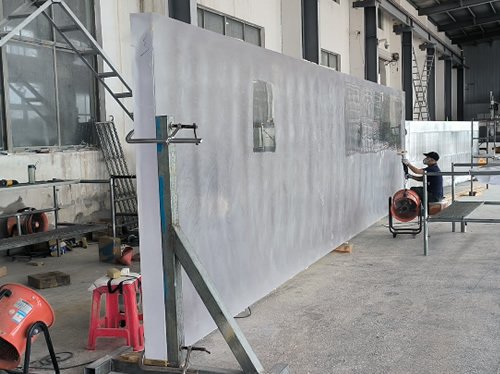
Application and Value of 25cm (250mm) Thick Acrylic Sheets in Aquariums
In the construction of modern aquariums and marine parks, acrylic sheets have replaced traditional tempered glass and become the core main material for large-scale water landscape projects. Among them, 25cm (250mm) ultra-thick acrylic sheets feature ultra-high compressive strength, excellent light transmittance, corrosion resistance and flexible formability. They are well-suited for aquarium engineering scenarios requiring large water depth, long span and high safety standards, serving as indispensable special materials for high-end large-scale aquariums. Compared with conventional thin acrylic sheets, 250mm thick sheets can withstand high water pressure from dozens of meters of water depth while eliminating the defects of glass such as fragility, heavy weight and splicing risks. They are widely applied in core viewing areas, water enclosure structures and characteristic landscapes of aquariums.
1. Viewing Windows for Deep-Water Exhibition Pools
Large ecological exhibition pools, whale shark pools and deep-sea biological exhibition areas are the core scenic spots of aquariums. These water areas generally feature great water depth and large water storage capacity, and their side walls are subjected to strong hydrostatic pressure. This puts forward extremely high requirements on the compression resistance, stability and safety of viewing window materials, making 25cm thick acrylic sheets the optimal choice for such scenarios.
Small and medium-sized aquarium exhibition areas only require acrylic sheets of several tens of millimeters in thickness. However, for large exhibition areas with a water depth of more than 5 to 8 meters, the water pressure increases exponentially with depth, and ordinary sheets are prone to deformation and bursting risks. Manufactured with precision integral molding technology, 250mm ultra-thick acrylic sheets deliver a compressive strength of over 80MPa, which can stably resist deep-water high pressure and avoid bulging and deformation during long-term service, completely eliminating potential safety hazards. Meanwhile, the light transmittance of the sheets reaches more than 90%. Without the green edge distortion of glass, they can restore the true colors of underwater landscapes to the greatest extent and provide visitors with an immersive viewing experience.
Benchmark aquariums across China adopt this specification of acrylic sheets to build giant viewing windows. For instance, the core viewing panel of the “Super Large Fish Tank” in Nanjing Xuanwu Lake is made of custom 25cm thick acrylic sheets. Adopting ultra-long seamless splicing technology, it fully presents the underwater natural ecology and forms a visually stunning underwater viewing interface. 25cm thick acrylic viewing windows can balance safety and viewing effects perfectly for large fish exhibition areas, deep-sea simulation exhibition areas and rare marine organism conservation pools.
2. Main Structure of Giant Integral Aquariums
With the upgrading of aquarium landscape design, oversized integral fish tanks and special-shaped landscape water tanks have become key design highlights. These frameless, large-span integral water structures demand strict standards for material thickness, toughness and integral molding performance, and 25cm thick acrylic sheets serve as the core load-bearing material.
Traditional glass fish tanks cannot realize large-size integral molding, suffering from numerous splicing gaps, poor airtightness, heavy self-weight and difficult installation. In contrast, 250mm acrylic sheets support oversized integral molding and curved shaping, enabling the fabrication of various special-shaped giant water tanks including square, round and arc structures. The main structure of the 14-meter-high giant cylindrical aquarium in a Zhejiang expressway service area is assembled with precision from oversized 25cm thick engineering-grade acrylic sheets. The overall structure is stable with excellent airtightness, capable of bearing massive water bodies for a long time. The fully transparent and unobstructed structure creates a stunning panoramic underwater landscape.
This specification of acrylic sheets boasts far better toughness and impact resistance than glass. It can withstand water fluctuation, impact from swimming fish and minor external collisions. Adapted to the long-term regular operation of aquariums, it greatly reduces subsequent maintenance costs and features a service life of several decades.
3. Enclosure of Underwater Sightseeing Tunnels and Corridors
Underwater sightseeing tunnels are core characteristic landscapes of aquariums, allowing visitors to walk under water and view underwater ecology in a 360° panoramic way. The side walls and dome enclosure structures of such tunnels are mostly constructed with 25cm thick acrylic sheets.
As pressure-bearing closed landscape structures, underwater tunnels need to withstand tremendous water pressure from the upper water layer and meet safety standards for pedestrian passage, requiring materials with high strength, flatness and fatigue resistance. 250mm ultra-thick acrylic sheets possess excellent structural stability, resisting aging and deformation under long-term pressure. With special anti-algae and anti-scratch surface treatment, they can withstand seawater corrosion and microbial adhesion, maintaining long-term transparency and cleanliness.
Compared with thin acrylic sheets, 25cm thick acrylic sheets support large-span tunnel construction without additional supports, reducing shelter from steel structures and broadening the overall viewing field of tunnels. Meanwhile, with a density only 50% of glass, they effectively reduce the overall load of tunnels and lower the cost of civil engineering and steel structure construction, making them the core material for hundred-meter-level underwater tunnels in large marine parks.
4. Immersive Underwater Viewing Platforms and Sunken Landscapes
Modern aquariums often build sunken viewing platforms, underwater viewing seats and immersive underwater experience areas. 25cm thick acrylic sheets are widely used for the partitions and viewing facades of these semi-open underwater landscape structures.
Such scenarios require materials to balance pressure resistance, transparency and safety. 250mm acrylic sheets enable large-area seamless paving to build transparent underwater partitions that separate visitor areas from water areas without blocking sightlines, bringing visitors an immersive underwater experience. For outdoor waterfront aquariums and landscapes connected with natural water areas, the sheets adapt well to outdoor environments, resisting ultraviolet rays, wind and rain erosion. They will not turn yellow, fog or crack after long-term outdoor exposure, suitable for building immersive landscapes in both indoor and outdoor scenarios.
5. Isolation Walls for High-End Diving Interactive Exhibition Areas
Some aquariums are equipped with characteristic functional areas such as diving experience, underwater interaction and popular science diving display. 25cm thick acrylic sheets are the optimal material for building safety isolation walls between water areas, visitor areas and operation areas.
Diving areas feature severe water disturbance and strong water impact, with risks of close human contact and equipment collision, placing high demands on the impact resistance and structural strength of materials. 250mm ultra-thick acrylic sheets have far superior impact resistance to ordinary glass and thin acrylic sheets, which can effectively resist water impact, human body and equipment collision and ensure the operational safety of exhibition areas. Their high transparency will not affect underwater popular science display and tourist photography, achieving a perfect balance of functionality and display performance.
Conclusion
Featuring high-pressure bearing, high transparency and wear resistance, corrosion resistance, flexible special-shaped forming and ultra-long service life, 25cm (250mm) thick acrylic sheets accurately meet the engineering requirements of aquariums for large water depth, long span, high safety and high viewing quality. They cover core application scenarios including viewing windows, giant water tanks, underwater tunnels, immersive landscapes and interactive exhibition area isolation. As core special materials for high-end aquarium engineering, they not only solve the safety and visual pain points of traditional building materials, but also promote the upgrading of aquarium landscapes towards immersion, panoramic view and high-end design, serving as indispensable key materials for modern large-scale marine parks and characteristic aquarium landscapes.