Custom Aquarium Design
Custom-Made Extra-Large Acrylic Fish Tanks
Custom Acrylic Swimming Pools
Design of the Jellyfish Pavilion at the Aquarium
Fish Pond Restaurant Design
Ocean-Themed Restaurant Design
Whale Aquarium, Ocean Park
Aquarium Restaurant
Mermaid Show Pool

How to Design a Jellyfish Gallery in Dubai: Acrylic Displays & Engineering Guide

QIAN KAI ACRYLICDubai, UAE / Exhibition Design Study

Jellyfish Gallery Design / Acrylic Viewing Experiences

How to Design a Jellyfish Gallery in Dubai

Four acrylic viewing formats, species-specific water circulation and practical planning principles for an immersive marine exhibition.

Design & Planning GuideDubai / United Arab EmiratesQian Kai Acrylic
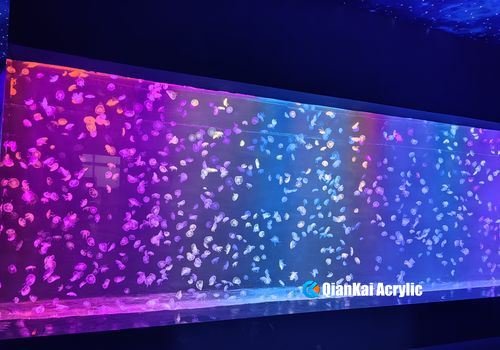
Panoramic acrylic jellyfish viewing display with illuminated pink and blue water zones
Visual reference 01 — a panoramic viewing window can create a shared focal point and a continuous underwater scene. This image is a design reference, not proof of a completed Dubai installation.

Quick answer: what makes a jellyfish gallery work?

A successful jellyfish gallery is designed around the animals first and the visitor experience second. The project team should confirm the jellyfish species and life stage, establish suitable circulation and life-support conditions, and then select acrylic viewing formats that fit the building, visitor route and maintenance plan. A visually attractive cylinder or panoramic window is not automatically a suitable jellyfish habitat; internal water movement, filtration, intake protection and daily care procedures must also be designed.

  • Species-appropriate habitat and controlled water movement
  • Clear acrylic viewing geometry and project-specific structural design
  • Filtration, temperature and water-quality management
  • Accessible visitor routes and practical maintenance access

01 / Visitor experience

Design the journey, not just the tanks

A memorable gallery uses light, viewing distance and movement to guide attention while keeping the exhibition comfortable and easy to navigate.

The strongest jellyfish exhibition is not necessarily the largest. It is the one that gives visitors a reason to pause, look closer and understand what they are seeing.

For a proposed cultural or leisure venue in Dubai, the visitor journey can move from a broad panoramic view to smaller, more intimate observation points. The first space establishes atmosphere; the next introduces different tank shapes and viewing distances; the final moments provide interpretation and a closer look at the animals.

Lighting should reveal the jellyfish without creating distracting reflections on the acrylic surface. Ambient room lighting, exhibit lighting and interpretive displays should be coordinated rather than designed independently. Viewing heights, circulation widths, queuing areas and accessible routes should be resolved on the architectural plan.

Where the venue serves both local and international audiences, the interpretation strategy can consider Arabic and English information, clear wayfinding and concise explanations of jellyfish biology.

02 / Acrylic display formats

Four ways to frame the underwater world

Cylinders, repeated columns, circular windows and panoramic panels create different viewing experiences. The right format depends on the exhibition purpose and the habitat system behind it.

Comparison: acrylic viewing formats for a jellyfish gallery
Display format Best suited to Key planning considerations
Freestanding cylindrical display Multi-sided viewing and a compact focal point within an open gallery. Allow visitors to move around the tank. Coordinate internal circulation, drain protection, lighting reflections and service access at the base.
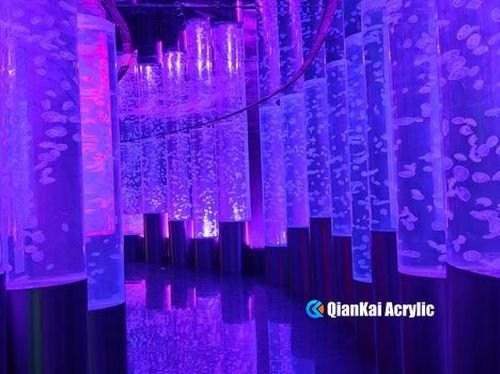
Repeated acrylic columns A sequence of viewing moments that creates depth and a sense of immersion. Set column spacing around clear sightlines, comfortable circulation, cleaning access and the location of life-support pipework.
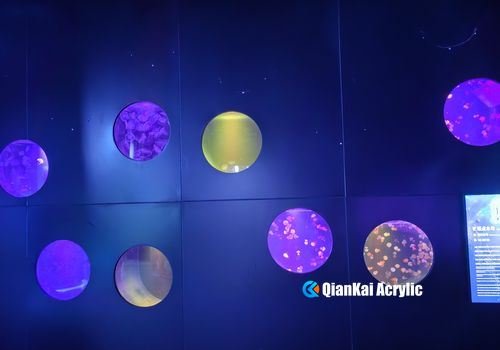
Circular viewing windows Focused observation, individual species stories and smaller interpretation zones. Confirm viewing height, aperture size, edge detailing and the relationship between each window and the tank behind it.
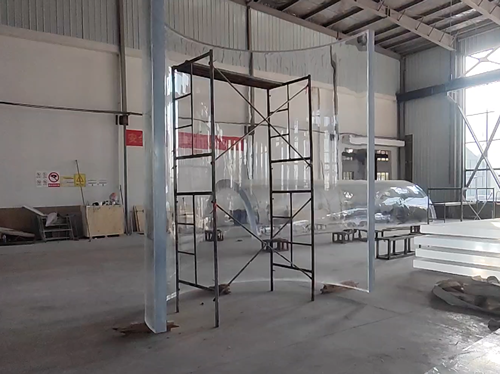
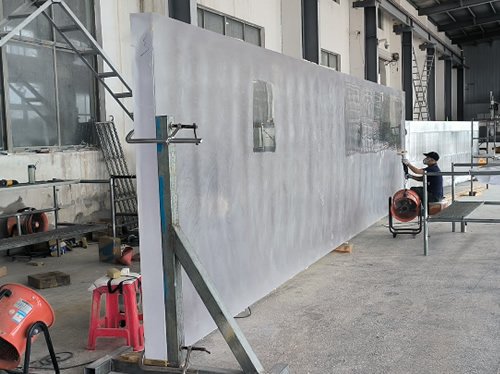
Panoramic viewing panel A shared focal point for groups and a broad, continuous view across the exhibit. Review water depth, unsupported span, support conditions, long-term deflection, installation route and visitor flow.
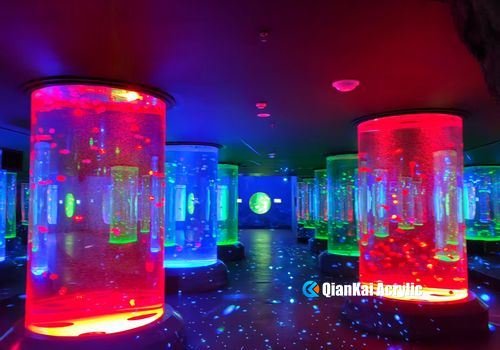
Freestanding cylindrical acrylic jellyfish display tanks with vivid exhibition lighting
Visual reference 02 — cylindrical displays invite visitors to view the exhibit from several directions.
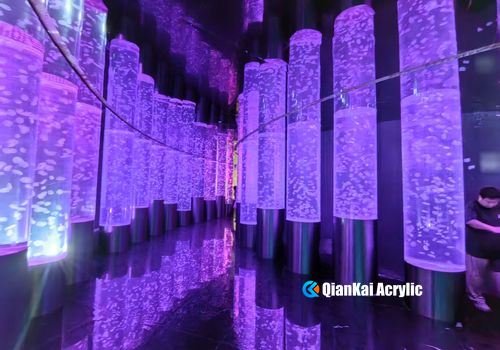
Repeated tall acrylic jellyfish columns arranged as an immersive gallery installation
Visual reference 03 — repeated columns create rhythm, depth and changing sightlines along a gallery route.
Circular acrylic viewing windows displaying jellyfish against a dark exhibition wall
Visual reference 04 — circular viewing ports turn a large wall into focused observation points.
Important distinction: the acrylic viewing shape and the animal habitat are two related but different design decisions. A cylindrical or panoramic exterior can be paired with a specialist internal circulation arrangement. The display should never be selected on appearance alone.

Good acrylic design does more than make water visible. It creates a clear viewing experience while protecting the conditions marine life needs.

03 / Jellyfish life support

Water movement is part of the habitat design

Jellyfish are not simply displayed in a conventional fish tank. Their movement, body structure and life stage influence circulation and filtration.

For many free-swimming jellyfish, the flow pattern is as important as the tank shape.

The Association of Zoos and Aquariums’ Jellyfish Care Manual explains that many jellyfish depend on water movement to remain suspended. Inadequate flow can allow animals to settle or approach drain screens, while poorly directed or excessive flow can cause damaging contact with tank surfaces.

The manual describes distributed, gentle flow as an important design consideration. In suitable systems, water is introduced in a controlled pattern across a broad section of the enclosure rather than as a concentrated jet aimed directly at the animals.

Research published in Frontiers in Marine Science describes the use of kreisel-style aquariums for jellyfish rearing. These systems use circular flow and separated inlet and outlet areas to help keep animals moving through the water while reducing the risk of contact with the drain screen. The study also shows why tank design must account for life stage and operating conditions.

This does not mean every jellyfish species requires an identical kreisel tank. Circulation pattern, flow rate, screen design and water conditions must be confirmed by an experienced aquatic life-support and animal-care team for the intended species.

01 / Circulation

Design a smooth, species-appropriate flow pattern. Avoid concentrated jets, stagnant areas and circulation that pushes animals against walls or screens.

02 / Intake protection

Coordinate drain screens, screen openings and water velocity with the size and life stage of the animals. Prevent animals from being drawn onto the intake.

03 / Water quality

Plan mechanical filtration, water exchange and monitoring around the system design. Temperature, salinity and dissolved oxygen should remain appropriate for the selected species.

04 / Operations

Provide access for routine inspection, cleaning, feeding, water testing and equipment servicing. A visually concealed plant room still needs safe working access.

Practical rule: confirm the species list and animal-care protocol before finalizing the tank’s internal geometry. A system designed for one species or life stage should not automatically be assumed suitable for another.

04 / Acrylic engineering

From a visual concept to a buildable structure

Acrylic viewing panels are part of a water-retaining structure. Their dimensions, support and interfaces must be engineered for the actual installation.

There is no universal acrylic thickness for every aquarium window.

Panel thickness cannot be selected from a photograph or water depth alone. The engineering review should consider water depth, unsupported span, panel geometry, edge support, frame conditions, joint details, design loads and required safety factors.

Long-term behavior also matters. Technical guidance for underwater acrylic glazing discusses time-dependent deformation, commonly known as creep, under sustained loading. The design should therefore review both stress and deflection over the intended service life.

For a custom jellyfish gallery, the acrylic specification should be coordinated with the surrounding concrete or steel structure, waterproofing interfaces, access openings and installation sequence. Bonded joints and frame interfaces should be detailed before fabrication rather than left for adjustment on site.

Optical quality is also part of the visitor experience. Surface finish, haze, scratches, reflections and distortion can change how clearly visitors see the animals. Material inspection, handling protection and an agreed acceptance standard should be included in the project documentation.

Structural calculation

Confirm water depth, opening dimensions, unsupported span, support conditions, loads, deflection limits and project-specific safety requirements with a qualified engineer.

Material and fabrication

Specify the required PMMA grade, material traceability, thickness tolerance, surface quality, edge preparation and inspection records.

Frame and waterproofing interface

Coordinate rebates, bearing surfaces, seals, joint geometry and the connection between the acrylic panel and the building structure.

Transport and installation

Check panel weight, delivery dimensions, lifting points, access routes, temporary supports, installation clearances and the sequence for sealing and testing.

05 / Dubai project planning

What should be checked on the Dubai site?

The concept can be adapted to a cultural venue, aquarium, hospitality interior or public attraction, but the final design must respond to the actual building and operating team.

For a proposed gallery in Dubai, the first step is a site-specific coordination review. The design team should not assume that a visual reference already accounts for local building conditions, cooling capacity, humidity control, power supply, drainage or authority requirements.

Building coordination

Verify floor and wall loads, structural openings, plant-room location, waterproofing, drainage and the route for bringing large acrylic components into the building.

Indoor environment

Coordinate the building’s HVAC, room temperature, humidity and solar gain with the environmental requirements of the selected jellyfish species and life-support system.

Lighting and interpretation

Control glare and reflections on viewing panels. Plan exhibit lighting, accessible viewing heights and clear interpretation; bilingual Arabic-English information may suit the intended audience.

Visitor and service routes

Separate public circulation from maintenance access where possible. Allow for queuing, cleaning, feeding, inspection and safe equipment replacement.

06 / Project preparation

What information is needed before requesting a quotation?

A clear project brief helps the acrylic fabricator, architect, structural engineer and aquatic life-support team coordinate earlier.

Before discussing a custom acrylic jellyfish display, prepare the available architectural drawings and a basic exhibit brief. Exact engineering dimensions can be developed later, but the initial information should describe the intended viewing experience and the operating habitat.

  • Project location and building type
  • Architectural plan, section and installation route
  • Proposed tank shape, dimensions and water depth
  • Jellyfish species, life stage and approximate display quantity
  • Viewing-panel opening, support and frame information
  • Filtration, circulation, temperature and maintenance requirements
  • Target opening date and construction-stage constraints
If some details are not yet available, share the drawings and concept images first. The missing engineering and life-support information can then be identified for review by the relevant specialists.

Common questions

Jellyfish gallery design: five practical answers

1. What is the best tank shape for a jellyfish exhibit?

There is no single best shape for every species. Many free-swimming jellyfish are kept in specialist circular or kreisel-style systems because controlled circulation can help keep them suspended and away from drain screens. The final shape and flow regime should be selected with the animal-care team.

2. Can jellyfish be displayed in a standard acrylic aquarium?

Not without checking the habitat requirements. A standard aquarium may not provide the circulation pattern, intake protection or water-quality control required by the intended jellyfish. The internal tank design must suit the species and life stage.

3. How thick should an acrylic jellyfish tank panel be?

There is no universal thickness. It must be calculated from water depth, unsupported span, support conditions, panel geometry, material properties, joints and project-specific safety requirements. A qualified structural engineer should review the final specification.
4. Which acrylic display format is best for a public gallery?

A panoramic window works well as a shared focal point, cylindrical displays encourage multi-sided viewing, repeated columns create a spatial sequence, and circular windows support close observation. The choice depends on visitor flow, building geometry, animal care and maintenance access.
5. What should be prepared for a custom acrylic aquarium enquiry?

Prepare the project location, architectural drawings, tank dimensions, water depth, preferred viewing format, intended species and available support details. Include the installation route and life-support requirements if known.

Qian Kai Acrylic / Custom Acrylic Aquarium Displays

Make the underwater world part of the architecture.

Qian Kai Acrylic explores custom acrylic aquarium and viewing solutions for architectural, exhibition and aquatic display environments. For a proposed jellyfish gallery in Dubai, the strongest starting point is a coordinated brief that brings together the viewing concept, building drawings, structural review and specialist animal-care requirements.


Editorial note: This article is a design and planning study for a proposed jellyfish gallery in Dubai, UAE. The four images are visual references for acrylic display formats; they do not verify a completed project at that location. Final tank specifications, animal-care procedures, structural calculations and local approvals must be confirmed by qualified project specialists.

Brand: Qian Kai Acrylic.